🚨 “One Piece of Equipment Can Decide Who Lives”: The Emergency Gear Every Deadliest Catch Crew Trusts in the Bering Sea
🚨 “One Piece of Equipment Can Decide Who Lives”: The Emergency Gear Every Deadliest Catch Crew Trusts in the Bering Sea

For millions of viewers, Deadliest Catch is known for towering waves, freezing temperatures, and crews battling one of the world’s most dangerous workplaces. Every season, audiences watch steel crab pots swing across icy decks while captains navigate through violent storms in search of Alaska’s valuable crab harvest.
But beneath every dramatic catch lies another story that rarely receives the spotlight.
It is a story about survival.
Every crew member who steps aboard a Bering Sea crab boat knows a simple truth: no amount of experience can completely eliminate danger. Mechanical failures happen. Weather changes in minutes. Waves can sweep across the deck without warning. A single mistake may place lives at risk.
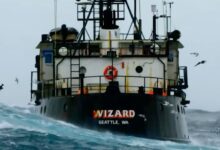
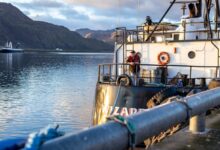


That is why modern commercial crab vessels carry an extraordinary collection of emergency equipment—gear that most viewers never notice but that could determine whether a crew survives an accident at sea.
For the captains featured on Deadliest Catch, emergency equipment is not simply required by regulation.
It is their last line of defense.
The Survival Suit Every Fisherman Hopes Never to Use
Perhaps the most recognizable piece of emergency equipment aboard a crab boat is the immersion suit, often called a survival suit.
Bright orange and heavily insulated, the suit is specifically designed to protect fishermen who are forced into the freezing waters of the Bering Sea.
Water temperatures often hover just above freezing.
Without protection, cold-water shock can overwhelm a person within minutes, while prolonged exposure can quickly lead to hypothermia.
The immersion suit dramatically slows heat loss by sealing out cold water and trapping insulating air around the body.
Every crew member is expected to know exactly where their suit is stored.
More importantly, they must be able to put it on quickly—even in darkness or during rough seas.
Many captains require regular practice because emergencies rarely provide extra time.
EPIRBs: The Silent Lifeline
Hidden aboard every commercial fishing vessel is another critical device known as an Emergency Position-Indicating Radio Beacon, or EPIRB.
Unlike radios that depend on someone making a distress call, an EPIRB automatically transmits the vessel’s location to international search-and-rescue satellites when activated.
Modern EPIRBs can continue broadcasting for many hours, allowing rescue authorities to locate a vessel even if all other communication systems fail.
For crews operating hundreds of miles from shore, this technology has become indispensable.
When weather prevents radio communication or electrical failures disable onboard equipment, the EPIRB remains one of the most reliable ways to alert rescuers.
Captains routinely inspect these beacons before every fishing season begins.
Life Rafts Built for the Worst Day
Commercial crab boats also carry inflatable life rafts designed to deploy rapidly during emergencies.
Packed inside durable containers, the rafts automatically inflate once released into the water.
Inside are emergency supplies intended to support survivors until rescue arrives.
These often include drinking water, emergency food rations, signaling devices, thermal blankets, first-aid supplies, repair kits, and survival instructions.
Although crews hope they will never need them, every fisherman understands that knowing how to launch a life raft is just as important as knowing how to operate fishing equipment.
Fire Protection Few People Ever Notice
Fire remains one of the greatest threats aboard any fishing vessel.
Unlike storms, fires can spread through machinery spaces within moments.
Modern crab boats therefore carry multiple layers of fire protection.
Portable fire extinguishers are positioned throughout the vessel.
Fixed fire-suppression systems protect engine rooms.
Smoke detectors provide early warning.
Emergency shut-off switches allow crews to isolate fuel systems if necessary.
Before every season, engineers inspect these systems carefully.
Even small maintenance issues receive immediate attention because an engine-room fire far from shore can quickly become catastrophic.
Man-Overboard Equipment
One of the greatest fears aboard any fishing vessel is a crew member falling overboard.
Strong currents, freezing temperatures, and heavy seas create an extremely dangerous situation.
To improve rescue chances, vessels carry specialized recovery equipment.
Life rings equipped with lights and smoke markers help identify the person’s location.
Throw bags containing floating rescue lines allow nearby crew members to assist.
Recovery slings and lifting devices help bring exhausted survivors safely back aboard.
Regular man-overboard drills ensure everyone understands their responsibilities before an actual emergency occurs.
Communication That Never Stops
Reliable communication forms another essential layer of safety.
Modern crab boats carry multiple communication systems rather than relying upon a single device.
Marine VHF radios provide short-range communication with nearby vessels.
Satellite communication systems allow contact with shore-based operations even hundreds of miles offshore.
Emergency radios offer backup capability should primary systems fail.
Many captains also maintain continuous weather updates throughout the voyage, allowing them to adjust course before dangerous conditions arrive.
Medical Kits Prepared for Remote Emergencies
Professional medical assistance may be many hours away in the Bering Sea.
For this reason, commercial fishing vessels carry comprehensive medical kits capable of treating injuries until evacuation becomes possible.
Supplies typically include trauma dressings, splints, burn treatment materials, medications, oxygen equipment, and emergency diagnostic tools.
Crew members often receive basic first-aid and CPR training before joining the vessel.
Some captains encourage additional emergency medical instruction because immediate treatment can significantly improve outcomes following serious injuries.
Personal Flotation Devices Have Improved Dramatically
Traditional life jackets have evolved considerably.
Modern inflatable personal flotation devices are lighter, less restrictive, and far more comfortable for fishermen working long hours on deck.
Some automatically inflate when submerged.
Others include integrated locator lights, whistles, reflective tape, and attachment points for personal locator beacons.
These improvements encourage consistent use without interfering with demanding physical work.
Technology Cannot Replace Preparation
Although emergency equipment has advanced dramatically over recent decades, experienced captains consistently emphasize one important lesson.
Equipment alone does not save lives.
Training does.
Throughout every fishing season, crews conduct emergency drills covering fire response, flooding, abandoning ship, medical emergencies, and man-overboard recovery.
Repeated practice ensures that every crew member reacts automatically during high-pressure situations.
When panic threatens to overwhelm clear thinking, muscle memory becomes invaluable.
Safety Begins Before Leaving Port
Long before cameras begin filming another season of Deadliest Catch, every vessel undergoes extensive safety inspections.
Life rafts receive certification.
EPIRBs are tested.
Fire extinguishers inspected.
Medical supplies restocked.
Immersion suits checked for damage.
Communication systems verified.
Captains understand that overlooking even a minor safety issue can have enormous consequences later.
Preparation remains one of the most important investments any crew can make.
Respecting the Sea
The Bering Sea has earned its reputation through generations of commercial fishermen.
Its storms arrive quickly.
Its waters remain dangerously cold.
Its conditions demand constant respect.
Even with today’s advanced technology and safety equipment, nature continues to hold the final word.
That reality explains why experienced captains never become complacent.
Every departure from Dutch Harbor begins with careful preparation.
Every crew member knows where emergency equipment is stored.
Every drill reinforces lessons that could one day save lives.
Viewers watching Deadliest Catch naturally remember the dramatic catches and breathtaking storms.
Yet some of the most important stories happen quietly, away from the cameras.
A carefully inspected survival suit.
A freshly serviced EPIRB.
A life raft secured in its cradle.
A first-aid kit fully stocked.
These pieces of equipment may never appear in the season’s most memorable scenes.
But if disaster strikes, they become the difference between hope and tragedy.
For the men and women who earn their living in one of the harshest environments on Earth, the greatest catch is never measured by the number of crab in the hold.
It is measured by something far more valuable.
Every crew member returning safely home.