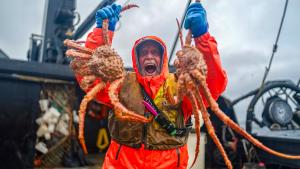
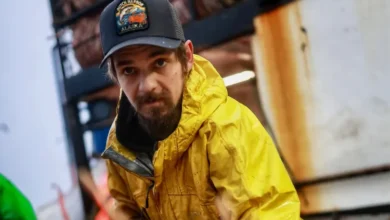
The Crab Didn’t Vanish Overnight—Why Deadliest Catch Captains Are Sailing Farther Than Ever Before
The Crab Didn't Vanish Overnight—Why Deadliest Catch Captains Are Sailing Farther Than Ever Before
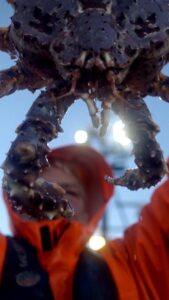
For decades, the Bering Sea has been the beating heart of Alaska’s legendary crab fishing industry. Every season, fleets of powerful vessels leave Dutch Harbor with one goal: locate productive crab grounds before time, weather, and competition run out.
But in recent years, veteran captains have noticed something they never expected to see.
The crab isn’t always where it used to be.
Instead of dropping their pots in traditional fishing grounds that produced reliable catches for generations, many captains are now forced to steam farther across the Bering Sea, burning more fuel, spending more time searching, and taking greater risks before hauling their first successful string of pots.



To many viewers of Deadliest Catch, it may appear that the fleet is simply exploring new areas.
The reality is far more complicated.
Changing environmental conditions, shifting crab populations, evolving fisheries management, and modern fishing strategies have all combined to reshape one of the world’s most famous commercial fisheries.
The search for crab has become more unpredictable than ever before.
A Fishing Map That No Longer Looks the Same
Years ago, experienced captains could rely heavily on historical knowledge.
Certain locations consistently produced healthy catches.
Generations of fishermen passed these productive coordinates to sons, brothers, and trusted crew members.
Experience often outweighed technology.
Today, those familiar hotspots no longer guarantee success.
Scientific surveys have shown that crab populations naturally shift over time, influenced by ocean temperatures, food availability, sea ice conditions, and habitat changes. Areas that once held large numbers of crab may produce fewer catches during later seasons, requiring captains to rethink long-established strategies.
For many veterans, adapting has become just as important as experience itself.
Every Extra Mile Costs Money
Finding new fishing grounds isn’t as simple as pointing the bow toward another part of the ocean.
Every additional mile means fuel.
A modern crab boat burns enormous amounts of diesel while traveling across the Bering Sea.
Longer voyages increase operating expenses before the crew even begins fishing.
Then come additional costs.
Crew wages continue.
Engines accumulate more operating hours.
Hydraulic systems experience greater wear.
Generators consume more fuel.
The financial pressure grows with every hour spent searching instead of hauling crab.
Captains understand that an unsuccessful search can quickly turn a promising season into a disappointing one.
The Ocean Is Constantly Changing
The Bering Sea is one of the most dynamic marine ecosystems on Earth.
Water temperatures vary from year to year.
Ocean currents shift.
Storms redistribute nutrients.
Sea ice coverage changes throughout the winter.
These environmental factors influence where crab live, feed, and reproduce.
Scientists with fisheries agencies conduct extensive annual surveys to estimate crab populations before fishing seasons begin.
Those surveys help determine catch limits designed to protect future generations of crab.
While captains possess decades of practical experience, scientific research has become increasingly important in understanding long-term changes across Alaska’s fisheries.
The combination of science and traditional knowledge now guides many fishing decisions.
Technology Helps—But Doesn’t Guarantee Success
Modern crab boats are technological marvels compared with vessels operating thirty years ago.
High-resolution radar.
GPS navigation.
Electronic charts.
Advanced sonar.
Satellite weather forecasting.
Digital communications.
Captains have more information available than ever before.
Yet technology cannot tell fishermen exactly where crab are waiting.
Electronics provide clues.
Experience interprets them.
Many captains compare modern fishing to solving a constantly changing puzzle.
Historical records, survey data, weather forecasts, bottom conditions, and instinct all contribute to deciding where the next string of pots should be deployed.
Sometimes those decisions lead to outstanding catches.
Sometimes they produce empty pots.
That uncertainty remains part of commercial fishing.
Every Pot Represents a Gamble
Unlike television viewers who watch a few minutes of edited footage, crews often spend many hours setting hundreds of heavy steel pots before discovering whether their strategy has worked.
Each deployment requires careful planning.
Captains consider water depth.
Ocean floor composition.
Current direction.
Nearby fishing activity.
Weather forecasts.
Time available before the next storm.
Once the gear reaches the seabed, there is nothing to do except wait.
When hauling begins, excitement quickly mixes with anxiety.
A full pot confirms good decisions.
An empty one means valuable time has been lost.
Throughout Season 22, viewers continue seeing how quickly fortunes can change from one string of pots to the next.
Competition Across the Fleet
Every captain hopes to discover productive fishing grounds before competitors arrive.
Although fishermen often maintain mutual respect, commercial fishing remains highly competitive.
When one vessel begins catching impressive numbers of crab, nearby boats naturally take notice.
This creates another challenge.
Captains must decide whether to remain patient with their own strategy or relocate before losing valuable time.
Moving hundreds of heavy crab pots requires enormous effort.
The decision is never taken lightly.
Conservation Shapes Every Season
Another reason captains travel farther involves fisheries management.
Alaska’s crab fisheries operate under carefully regulated catch limits established through scientific stock assessments.
These conservation measures are designed to ensure healthy crab populations for future seasons.
Occasionally, certain areas receive additional protections or changing harvest opportunities based on biological conditions.
Rather than viewing these regulations as obstacles, many experienced captains recognize that sustainable management protects both marine ecosystems and the long-term future of commercial fishing.
Without healthy crab populations, there would be no industry to support future generations.
The Crew Feels the Pressure Too
Searching longer affects everyone aboard.
Deckhands work exhausting shifts despite uncertain results.
Engineers monitor machinery operating for extended periods.
Cooks prepare meals while schedules constantly change.
Fatigue gradually increases as fishing plans evolve.
Yet morale often depends upon one successful haul.
A single productive location can completely transform the mood aboard a vessel.
Celebration replaces frustration almost instantly.
That emotional roller coaster has always defined life at sea.
Why Viewers Rarely Notice
On television, episodes naturally focus on dramatic catches, dangerous storms, and memorable personalities.
What audiences seldom realize is how much unseen searching happens between those exciting moments.
Hours of travel.
Repeated navigation adjustments.
Conversations between captains and crew.
Reviewing electronic charts.
Analyzing weather.
Recalculating fishing strategies.
Much of commercial fishing involves patience rather than action.
The cameras capture highlights, but every successful catch represents countless decisions made long before the first crab reaches the deck.
Experience Still Matters Most
Despite technological advances and scientific surveys, one truth remains unchanged.
The Bering Sea rewards experience.
Veteran captains understand how quickly conditions evolve.
They recognize subtle clues invisible to newcomers.
Cloud formations.
Wind direction.
Ocean color.
Current movement.
Bird activity.
Years spent on the water help transform scattered information into confident decisions.
That knowledge cannot be downloaded into a computer.
It must be earned.
The Future of the Fishery
Commercial crab fishing continues evolving alongside changing environmental conditions, advancing technology, and improved scientific understanding.
Captains entering today’s fishing seasons must remain flexible, adapting traditional skills to new realities.
The search may require longer voyages than in years past.
Fishing grounds may continue changing.
Operating costs may remain high.
Yet the determination of Alaska’s crab fleet remains remarkably consistent.
Every season begins with hope.
Every captain believes the next productive grounds are waiting somewhere beyond the horizon.
That belief has carried generations of fishermen across the Bering Sea, and it continues driving the fleet featured on Deadliest Catch today.
The crab may not have disappeared.
It has simply reminded everyone of an enduring truth about the ocean.
Nothing stays the same forever.
And for those willing to keep searching, the next great catch may always lie just a little farther away.