🚨 What Really Happens When the Cameras Leave? The Untold Business Inside Pawn Stars That Most Fans Never See
🚨 What Really Happens When the Cameras Leave? The Untold Business Inside Pawn Stars That Most Fans Never See
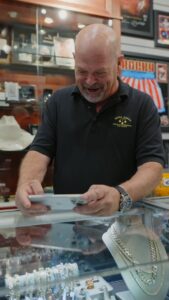
LAS VEGAS, Nev. — To millions of television viewers, Pawn Stars is all about fascinating collectibles, dramatic negotiations, and unexpected discoveries. Every episode follows a familiar formula: a customer walks into the Gold & Silver Pawn Shop with an unusual item, Rick Harrison evaluates it, an expert is called in if necessary, and a deal is either made—or politely declined.
But once the cameras stop rolling, what really happens inside one of the world’s most famous pawn shops?
The answer may surprise longtime fans.
While the television series has turned the Gold & Silver Pawn Shop into an international landmark, the business behind Pawn Stars continues to operate as a real pawn shop every single day. Behind the scenes, employees are buying, selling, researching, and helping customers long after the television crew has packed up.




A Television Set That Is Also a Real Business
Unlike many reality television programs filmed on constructed sets, the Gold & Silver Pawn Shop is first and foremost a functioning business.
Located just north of the Las Vegas Strip, the shop opened in 1989, nearly twenty years before Pawn Stars premiered on the History Channel. Long before television producers arrived, Rick Harrison and his father, Richard “The Old Man” Harrison, spent years building a reputation for fair dealing and expertise in collectibles.
Today, that original mission remains unchanged.
Every day, customers continue to visit the store hoping to pawn valuable items, sell family heirlooms, or purchase rare collectibles. While television has made the shop famous, the daily operation still depends on serving real customers rather than producing entertainment.
The Crowd Starts Before the Doors Open
One of the biggest differences between what viewers see on television and what actually happens outside the shop is the number of visitors.
Thanks to the success of Pawn Stars, thousands of tourists visit the Gold & Silver Pawn Shop every week. Many are not looking to buy or sell anything—they simply want to see the famous location featured on television.
Lines often begin forming before the shop opens, especially during busy travel seasons.
Visitors take photographs beside the famous sign, browse merchandise, and hope to catch a glimpse of Rick Harrison or other familiar faces from the show.
For many tourists, the visit has become as much a Las Vegas attraction as the city’s famous casinos.
Not Every Item Makes It to Television
One common misconception is that everything brought into the shop appears on Pawn Stars.
In reality, only a small percentage of interesting items ever become television segments.
Customers with potentially unique collectibles are often interviewed by members of the production team before filming begins. Producers look for items that have compelling stories, historical significance, or unusual backgrounds that will interest viewers.
Even then, not every item selected ultimately appears in an episode.
Some negotiations simply do not fit the final edit, while others are removed because of time limitations.
The result is that television audiences see only a carefully selected portion of what actually happens inside the shop.
Research Never Stops
Viewers often watch experts arrive seemingly moments after Rick Harrison requests their assistance.
Behind the scenes, however, evaluating valuable collectibles requires extensive preparation.
Employees spend time researching market prices, reviewing auction records, examining historical documentation, and verifying authenticity before major purchases are completed.
For particularly valuable items, additional consultation may continue long after filming ends.
This careful approach protects both the business and its customers.
Rick Harrison has repeatedly emphasized throughout the series that buying an item without proper research can become an expensive mistake.
Television Doesn’t Change Business Fundamentals
Although Pawn Stars has become one of television’s longest-running reality series, the fundamentals of the pawn business remain remarkably traditional.
Every purchase still depends on four essential questions:
- Is the item authentic?
- Is there current demand?
- Can it be resold?
- Is the asking price realistic?
These principles guide every negotiation, whether cameras are recording or not.
Television may add excitement, but business decisions continue to rely on careful analysis rather than dramatic moments.
A Team Effort Behind Every Deal
While Rick Harrison serves as the public face of the business, dozens of people contribute to the shop’s daily operation.
Sales associates help customers throughout the day.
Inventory specialists catalogue newly acquired items.
Researchers verify historical information.
Managers oversee pricing and inventory control.
Production staff coordinate filming schedules without interrupting normal business.
Together, these teams ensure that the shop continues operating smoothly despite attracting international attention.
It is a far more complex operation than many viewers realize.
Fame Brings New Challenges
The success of Pawn Stars has created opportunities—but also challenges.
The shop now receives far more visitors than a typical neighborhood pawn business.
Employees must balance tourists taking photographs with customers conducting legitimate financial transactions.
Security has also become increasingly important.
High-value collectibles, celebrity appearances, and large crowds require careful planning to protect both customers and merchandise.
Despite these changes, the shop continues functioning as a working business rather than a museum.
Life Beyond the Television Cameras
Many fans assume Rick Harrison spends every day filming episodes.
In reality, his schedule extends far beyond television.
He continues managing business operations, meeting collectors, attending industry events, promoting books, participating in interviews, and overseeing the Gold & Silver Pawn Shop’s long-term growth.
Filming represents only one part of his professional responsibilities.
The majority of business decisions occur quietly, without television cameras documenting every conversation.
Why Authenticity Still Comes First
Perhaps the greatest lesson from Pawn Stars is that reputation matters more than any single transaction.
Whether cameras are recording or not, Rick Harrison consistently emphasizes authentication, documentation, and expert evaluation.
Walking away from a questionable deal is often considered a better decision than risking the shop’s credibility.
That philosophy has helped establish the Gold & Silver Pawn Shop as one of the most respected names in the collectibles industry.
For Harrison, protecting customer trust remains more valuable than making a quick sale.
More Than Entertainment
Although millions know Pawn Stars as a hit television series, those who visit the Gold & Silver Pawn Shop quickly discover something different.
Behind the cameras is a business built on decades of experience, careful research, and daily interactions with customers from around the world.
The television show captures only a fraction of that story.
Every episode begins with an item crossing the counter, but countless hours of preparation, evaluation, negotiation, and business management continue after filming ends.
The Real Story
The greatest surprise about Pawn Stars may not be the rare collectibles or million-dollar discoveries.
It is the fact that beneath the global fame, the television ratings, and the celebrity status, the Gold & Silver Pawn Shop remains exactly what it has always been—a family business built on knowledge, trust, and the belief that every object has a story worth telling.
When the lights are switched off and the cameras leave for the day, the real work continues. Customers still walk through the front door with hopes of uncovering hidden value, employees continue researching history one artifact at a time, and Rick Harrison keeps doing what he has done for decades: making careful business decisions that have turned a small Las Vegas pawn shop into one of the most recognizable businesses in television history.
For fans, the magic of Pawn Stars does not end when an episode is over. In many ways, that is when the real story begins.