Rick Harrison Says the Collectibles Market Is Changing Faster Than Ever
Rick Harrison Says the Collectibles Market Is Changing Faster Than Ever
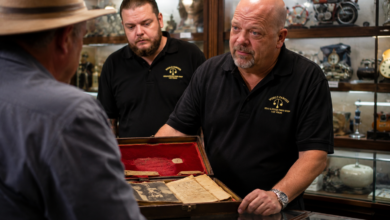
For decades, collectors have searched flea markets, estate sales, auctions, and pawn shops hoping to uncover hidden treasures. Few people understand that world better than Rick Harrison, the owner of the Gold & Silver Pawn Shop in Las Vegas and the longtime star of History Channel’s Pawn Stars.
After more than 15 years on television and thousands of transactions inside one of America’s most famous pawn shops, Rick believes the collectibles market is entering a new era. In recent interviews, he explained that changing economic conditions, rising precious-metal prices, and a new generation of collectors are transforming how rare items are bought and sold.
His observations offer an interesting look at why some collectibles are becoming more valuable while others are losing popularity.
A Different Market Than 10 Years Ago
When Pawn Stars first premiered in 2009, many customers arrived at the Gold & Silver Pawn Shop carrying items inherited from parents or grandparents.




Military memorabilia, antique firearms, vintage watches, rare coins, comic books, and signed sports memorabilia regularly appeared on the show.
Today, Rick says the market looks different.
More buyers begin their research online before ever walking into a pawn shop. Auction results are easier to access, and collectors often know much more about current prices than they did a decade ago.
That means negotiations have become more competitive.
Customers are usually better informed, but expectations can also become unrealistic if they rely on inaccurate information found online.
Precious Metals Continue to Draw Interest
One category that continues attracting attention is precious metals.
Rick has recently spoken publicly about strong demand for silver and gold, noting that global demand for silver remains high while supply has become increasingly tight.
Economic uncertainty often encourages investors to purchase physical precious metals, which can increase activity in shops that buy and sell bullion and collectible coins.
Although market prices fluctuate daily, Rick believes precious metals remain one of the most closely watched parts of the collectibles business.
History Still Matters
One lesson repeated throughout Pawn Stars is that historical significance often matters just as much as rarity.
Many expensive items featured on the show were not valuable simply because they were old.
Instead, they carried an important historical story.
Documents signed by famous leaders, military artifacts connected to significant events, and objects associated with influential people frequently command higher prices because of their historical context.
Rick has often explained that collectors are purchasing more than an object—they are purchasing a piece of history.
Authentication Is More Important Than Ever
As collectible prices increase, so does the importance of authentication.
Throughout the history of Pawn Stars, viewers have seen Rick invite experts to examine signatures, artwork, weapons, jewelry, and historical documents before making expensive purchases.
That process has become even more important in today’s market.
Counterfeit collectibles have become increasingly sophisticated, making professional authentication essential before significant money changes hands.
Rick has repeatedly advised collectors not to rely solely on appearances.
Documentation, expert opinions, and proven history can dramatically affect an item’s value.
Why Some “Rare” Items Sell for Less Than Expected
One of the biggest surprises for first-time sellers is discovering that an old object is not necessarily a valuable one.
Rick has explained in numerous interviews that rarity alone does not determine price.
Collector demand plays an equally important role.
An item may be extremely uncommon, but if few people want to buy it, its market value can remain relatively low.
Conversely, an object produced in larger numbers may command a high price because demand continues to grow.
This balance between rarity and demand is one of the reasons professional appraisals remain so important.
Television and Real Business
Although Pawn Stars focuses on entertaining negotiations, Rick has often noted that much of the shop’s daily business happens away from television cameras.
Employees evaluate merchandise, verify authenticity, research market values, and negotiate with customers throughout the day.
Only a small percentage of those interactions eventually appear in an episode.
That behind-the-scenes work helps explain why successful pawn businesses require both historical knowledge and financial discipline.
Looking Ahead
After more than fifteen years on television, Pawn Stars continues introducing viewers to remarkable artifacts from around the world.
While technology and collector interests continue evolving, Rick Harrison believes curiosity about history will always remain.
Every object has a story.
Whether it is a centuries-old coin, a vintage guitar, or a handwritten letter, understanding that story is often what transforms an ordinary item into something truly valuable.
For Rick Harrison, that philosophy has never changed.
Markets rise and fall.
Collector trends come and go.
But history—and the people who preserve it—will always have a place inside the Gold & Silver Pawn Shop.