🚁 Behind the Cameras: How the Deadliest Catch Film Crew Risks Their Lives Alongside the Fishermen
🚁 Behind the Cameras: How the Deadliest Catch Film Crew Risks Their Lives Alongside the Fishermen
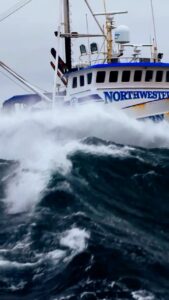
When viewers tune in to Deadliest Catch, their attention naturally turns to towering waves, overloaded crab pots, and the veteran captains battling the unforgiving Bering Sea. Yet another group quietly faces many of the same dangers without receiving nearly as much recognition—the camera crews who document every moment of the journey.
For more than two decades, Deadliest Catch has earned a reputation as one of television’s most authentic documentary series. That realism exists because small production teams live aboard the fishing vessels for weeks at a time, enduring the same storms, freezing temperatures, and exhausting schedules as the fishermen themselves.
Unlike traditional television productions, there are no comfortable trailers or large film crews waiting on shore. Typically, only one or two camera operators are assigned to each vessel. Their job extends far beyond simply recording dramatic footage. They must protect expensive equipment from saltwater, maintain cameras in sub-zero temperatures, and continue filming while standing on decks constantly moving beneath their feet.
The conditions are brutal.
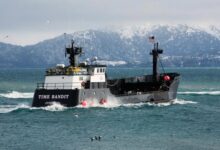
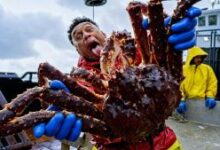
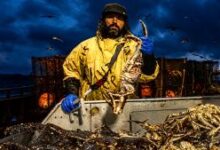
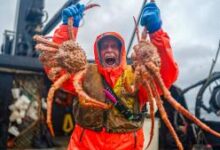
Saltwater can damage electronics within seconds.
Freezing spray coats cameras with ice.
Heavy crab pots weighing hundreds of pounds swing across the deck only a few feet away from production staff.
At the same time, camera operators must avoid interfering with the fishermen, whose attention is focused entirely on operating safely.
Discovery has explained in behind-the-scenes features that many cameras are permanently mounted around each vessel, allowing producers to capture moments that would otherwise be impossible to film safely. Additional handheld cameras are carried by onboard crews, while helicopters and chase boats provide wide shots whenever weather permits.
This unique filming style has become one of the reasons Deadliest Catch looks different from almost every other reality series.
Instead of carefully planned camera angles, viewers often see footage shaking with the movement of the ocean.
Water splashes directly onto the lens.
Crew members disappear behind crashing waves.
The imperfections help create a level of authenticity rarely found on television.
Veteran captains have frequently acknowledged the dedication of the production teams.
Over the years, cameramen have remained aboard during severe storms, mechanical failures, and emergency situations, documenting events while experiencing many of the same risks faced by the fishermen.
Of course, safety always comes first.
Production crews receive survival training and emergency equipment before joining a vessel. They participate in safety briefings, learn evacuation procedures, and wear the same protective gear used by fishermen whenever they work on deck. Even with these precautions, filming in the Bering Sea remains physically demanding.
Technology has also transformed the way the series is produced.
Early seasons relied primarily on handheld cameras and a limited number of fixed camera positions. Today, vessels are equipped with multiple permanently mounted cameras that record continuously, giving editors access to thousands of hours of footage each season. This allows the series to capture spontaneous moments without requiring a camera operator to be present every second.
Despite these advances, human storytelling remains at the heart of the program.
Camera operators often develop close relationships with the captains and crews after spending weeks together in isolated conditions. They witness not only successful catches but also moments of disappointment, celebration, exhaustion, and personal reflection that audiences rarely see in other television programs.
These quieter scenes have become some of the most memorable parts of Deadliest Catch.
A captain sitting alone in the wheelhouse after a difficult day.
Deckhands sharing coffee before another long shift.
Crew members calling home whenever satellite communication allows.
These moments remind viewers that commercial fishing is not simply about catching crab—it is about people living and working together in extraordinary circumstances.
The production team also faces unique editorial decisions.
Because Deadliest Catch documents real life rather than scripted entertainment, producers occasionally encounter tragic or deeply personal events. Discovery has repeatedly emphasized that decisions about what is shown on television are made with respect for those involved and, when appropriate, in consultation with affected families. This approach has helped maintain the trust of both the fishing community and longtime viewers.
More than twenty years after its debut, Deadliest Catch continues to stand apart because of its commitment to authenticity.
The fishermen risk their lives to earn a living.
The production crews risk harsh conditions to tell their stories.
Together, they have created one of the most respected documentary series in television history.
While audiences often celebrate record catches or dramatic rescues, many of the series’ greatest achievements happen behind the camera. Without the dedication, endurance, and professionalism of those documenting life aboard these vessels, millions of viewers around the world would never experience the realities of commercial crab fishing.
As Season 22 continues, the cameras remain rolling through every storm, every setback, and every success—bringing audiences closer than ever to life on the Bering Sea while reminding us that telling these stories requires courage from everyone on board.